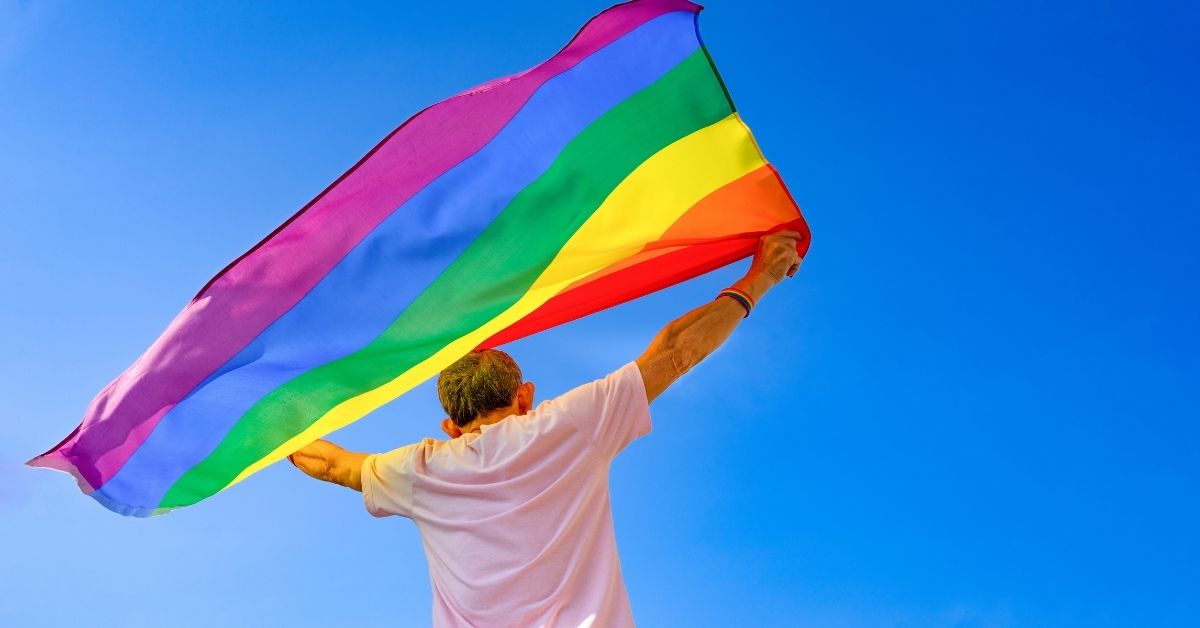
Every year when Pride Month rolls around, I’m reminded of something I once heard a friend say: for many gay men, Pride is our Christmas.
On the surface, the comparison sounds lighthearted. Pride is a season of celebration. There are parades, festivals, really cool parties, reunions and chosen family gatherings. People travel across countries and continents to be with friends. There is no shortage of colour, good music, anticipation, genuine joy and always lots of glitter!
But the analogy resonates for another reason. Like Christmas, Pride can also be emotionally complicated and rooted in stress and anxiety – even dread.
Because for every queer person celebrating with friends and loved ones, there is someone feeling lonely and “lesser” in the crowd. For every smiling photo posted to Instagram, there is someone wondering why they still feel disconnected. For every person dancing in the streets, there is another carrying grief, rejection, uncertainty or a nagging sense that they still haven’t quite found where they belong.
It’s not uncommon for queer people to question their existence. Recent research shows that among Canadian men, those who are Two-Spirit, gay, bisexual, transgender and queer are disproportionately impacted by suicidality.
Coming out was just the beginning
This Pride Month is especially meaningful for me because it marks 10 years since I came out and began living authentically as a gay man. In some ways, it feels like yesterday. In others, it feels like a lifetime ago.
When I came out in 2016 on the cusp of my 30th birthday, I believed the hardest part was behind me. I imagined that once I accepted my sexuality and shared it with the world, everything else would naturally fall into place. I assumed I would quickly build a large network of gay friends. I thought dating would become easier. I believed I would finally feel like I belonged.
But life proved more complicated. In hindsight, coming out wasn’t a destination, but rather the beginning of a long, difficult, yet exciting journey.
Today, I can say with confidence that living authentically has brought freedom, growth, community and countless opportunities that would never have been possible had I remained in the closet. Yet becoming more authentic hasn’t erased my struggle; it has changed the nature of it.
One of the most surprising lessons for me over the past 10 years is that loneliness doesn’t disappear simply because you come out. In fact, many queer people discover that coming out introduces entirely new questions about identity, belonging and connection.
Two years ago, I wrote a personal essay sharing that I’ve often felt like a misfit within my own community. Even after embracing my sexuality, I struggled to find where I fit: I wasn’t the person who came out in high school, nor do I share many of the formative experiences that shaped the lives of other gay men my age. In short, I’ve often felt like I arrived late to a party that everyone else already understood.
For years, I worried there was something wrong with me. But as I approach 40, I’m at peace with who I’ve become. There are countless ways to be gay, queer or trans. There is simply no single way of belonging. The older I get, the more I understand that authenticity isn’t about fitting into a community’s expectations; it’s about having the courage to show up as yourself.
More connected than ever, yet more alone
This lesson feels especially relevant today. We live in a world that is simultaneously more connected and more disconnected than ever before.
The pandemic fundamentally changed how many of us relate to one another. Remote and hybrid work reduced everyday opportunities for social interaction. Many physical community spaces struggled or disappeared altogether. At the same time, our lives have become increasingly digital.
Today, we can communicate instantly with people around the world, yet many of us have never felt more alone. This paradox is especially pronounced within queer communities in big cities like Toronto where I live.
Dating and hook-up apps have become community spaces while social media often functions as our primary source of connection. We are constantly observing one another, liking one another’s content, messaging one another and comparing ourselves to one another.
But observation isn’t the same thing as connection; visibility isn’t the same thing as belonging; and attention isn’t the same thing as intimacy.
The reality behind the Instagram grid
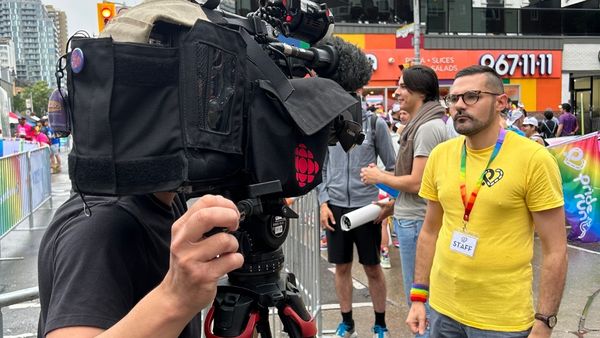
I know this because I’ve lived it. There have been moments over the past decade when I’ve felt deeply connected to the queer community while serving in volunteer leadership roles that have brought me purpose: roles like Chair of the Fife House Board of Directors or spokesperson for Toronto’s iconic Pride and Remembrance Run.
These rich experiences have grounded me in something much larger than myself.
But there have also been moments when I’ve sat alone scrolling through social media during Pride Month, wondering why everyone else appeared to be having a better experience than I was. The truth, of course, is that social media rarely tells the whole story. Behind the perfectly curated Pride photos are insecurities, heartbreaks, anxieties and struggles that most people never post online.
Pride can bring many of those emotions to the surface. For some people, Pride highlights a lack of connection. For others, it reinforces body image pressures that have long existed within parts of the gay men’s community. Many gay men feel immense pressure to attend every event, every party and every gathering. I’ve certainly been no stranger to these pressures in recent years.
Others struggle with the realities of a nightlife culture that often places a premium on alcohol and recreational drug use. The reality is that when it comes to this month, two things can be true at the same time: Pride can be the most affirming time of year, but it can also be the most alienating.
Why Pride still matters
There is still a common misconception among many Canadians that because we achieved marriage equality two decades ago, the struggle for 2SLGBTQ+ inclusion is largely over.
It isn’t. Yes, we have made extraordinary progress. But queer and trans people continue to navigate family rejection, workplace discrimination, social isolation and growing political hostility directed at our communities. Across North America and around the world, we are witnessing a resurgence of anti-2SLGBTQ+ speech, particularly toward transgender people.
Many young people are still asking themselves the same questions I asked myself a decade ago: Will my family accept me? Will my friends stay? Will I still belong? Will my life be okay?
What I would tell my younger self
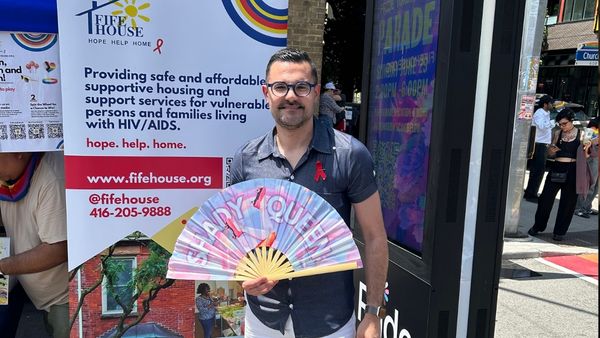
If there is one message I could offer my younger self, it’s this:
You don’t need to have it all figured out, or fit neatly into someone else’s definition of queer just to deserve love, friendship and a sense of belonging. The goal isn’t perfection — it’s authenticity.
As I mark a decade living authentically, I find myself reflecting less on visibility and more on connection. Less on fitting in and more on showing up honestly. Less on being accepted by everyone and more on accepting myself.
Maybe that’s what Pride is ultimately about. Not so much about the cool parties or the sexy photos, but about genuine connection and the courage to see one another fully and be seen in return. Because at its best, Pride isn’t merely a celebration. It’s a reminder that none of us were ever meant to navigate this journey alone.
Being a gay man is one of my life’s greatest blessings. Making the extremely difficult decision to come out and live authentically a decade ago was the best decision I’ve made in my 40 years.
Navigating the twists and turns of the gay experience has been both challenging and extremely rewarding. But through it all, I feel enriched, more empathetic and grateful for what my community has taught me as I continue down my journey of seeking connection.

Feeling off?
Start here.
Free tools to help you deal with stress, anxiety, and tough stretches.