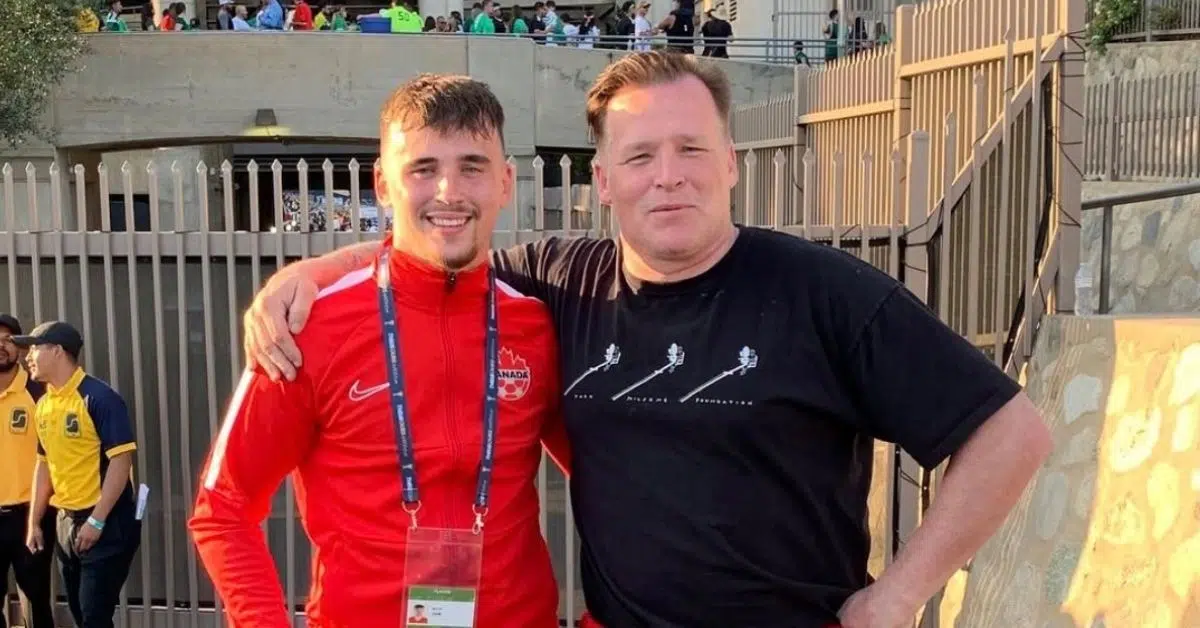
Amid the chaos and celebration, Alan Millar was looking for a quiet moment with his son.
Hull City had just been promoted to the English Premier League by winning a white-knuckle playoff match at London’s iconic Wembley Stadium. For the team’s Canadian left winger, Liam Millar, it was a milestone on a journey that spanned countries, clubs, injuries, setbacks and years of family sacrifice.
Up in the stands, Alan watched Liam scan the crowd. Then Liam spotted his dad and pumped his fist. Moments later, Alan jumped the barrier, only to be stopped by security. Liam told them to let him hug his dad.
“It was all worth it,” Alan said to his son. “You made it. You’re a Premier League player.”
Six days later, Liam was named to Team Canada for the 2026 FIFA World Cup.
For Alan, the Wembley embrace was about much more than Hull’s promotion victory. It was a father-son moment rooted in years of car rides, coaching sessions, hard choices and quiet support. At the same time, the long-time player, coach and referee also sees it as a symbol of how sports can uplift and connect people from all walks of life.
‘It’s about the relationships we build’
Long before Liam fought his way to the Premier League, he was simply a kid who wanted to be wherever the ball was.
“If I was going to soccer, whether I was coaching or playing, he was already in the car,” Alan recalls. “He wasn’t not coming.”
That early exposure mattered. As a youngster, Liam kicked a ball around on the sidelines while watching his father play in the Toronto Services Soccer League. What he saw at those games went beyond soccer and would stay with him forever, Alan says. “That environment helped shape not only his relationship with the sport, but also his understanding of what soccer can give people beyond wins and losses.”
Alan remembers Liam playing and training with friends in Oakville and Brampton, and going to the park to practice free kicks while pretending to be Cristiano Ronaldo. One of Liam’s closest friendships grew out of those years. More than a decade later, that bond is still there.
“It’s about the relationships we build,” Alan says. “When you’re bonding together to fight for something, you rely on each other.”
That, he believes, is one of the great overall strengths of community soccer. Players learn to trust others. They learn how to compete, how to lose, how to support teammates and how to stay connected.
“Those lessons last longer than any single season,” Alan says.
Staying fit with soccer
Like many older players, Alan has seen his own relationship with the game evolve. After a mild stroke, he took up walking soccer in a 50-plus league as part of his rehab.
At first, the slower pace frustrated him. Some of the older players, he jokes, seemed to run more than they were supposed to. But the experience reminded him of what he had always loved about the sport. “It made me feel alive again, the camaraderie and the friendship of it.”
Alan is realistic about his body’s limits. He has lived with multiple sclerosis for 20 years, works long hours and knows recovery takes longer than it used to. Walking soccer gave him a way to stay involved without pushing beyond what his body could handle.
That lesson applies to adult soccer leagues everywhere: staying in the game often means adjusting how you play. The competitive drive may still be there but warmups, pacing, recovery and knowing when to pull back become more important with age.
For Alan, the reward is worth it. Even when the game changes, the feeling of being part of a group remains. After all, staying fit with soccer isn’t just about physical health — it’s about mental health, too. The game gets people out of the house. It gives them a reason to move. It surrounds them with people who understand the easy banter and shared language of sport. “No matter what’s happening in your life, the minute you walk on that pitch, you just play,” Alan says.
That matters, especially for men who may otherwise become isolated. “Far too often, guys get left to their own devices and don’t feel like they can reach out to anybody,” Alan says.
Benefits beyond elite performance
Alan stresses that mental strength isn’t just about performing under pressure or pretending nothing hurts. Some of the family’s most difficult moments have shown the importance of vulnerability and support.
When Liam suffered a serious knee injury, Alan felt the helplessness many parents know well. He wanted to fix it, but he couldn’t — his role was simply to be there. “There’s nothing worse than telling your kids you can’t help them,” Alan says.
Around the same time Alan experienced his own mental health crisis after taking on too much at work. Telling Liam he wasn’t okay became an unexpected bonding moment between father and son. It reminded both of them that even the people who seem strongest need support.
Today, Alan sees soccer’s influence continuing through the next generation. Liam is now a father himself, with two of his three young daughters already playing the sport. Alan loves watching Liam coach them in the basement, setting up little drills the way Alan once did with him.
It’s a full-circle moment, one that proves that the game’s impact is not limited to elite performance. Soccer has given the Millar family structure, friendships, resilience, joy and a way to stay close across generations.
For parents raising soccer players who may or may not turn pro, Alan’s advice is grounded in balance: “Support them. Give them opportunities. Keep the game fun. Be realistic about the odds. And let the dream belong to them.”
Feeling off?
Start here.
Free tools to help you deal with stress, anxiety, and tough stretches.