I’ve been working with Club 16 Trevor Linden Fitness for years. I’ve also been a new dad. So I can tell you from both sides that nothing quite prepares you for what happens to you (and your routine) when a kid arrives.
As Director of Fitness Experience I oversee the personal training team at our gyms. Over the past 20 years, a lot of the guys I’ve worked with are new dads. We joke about the dad bod. It’s a cultural shorthand, a kind of knowing nod. But there’s more going on than most guys realize.
On average, new fathers drop about three hours of exercise per week after their first child. Those with bigger families may see an extra three-hour drop per kid.
There are a lot of factors to this. You’re now running on less sleep, less time and a completely rearranged sense of self. Your body is changing in ways that go beyond skipping leg day.
Although we don’t need to wonder if this happens, we do need to work through why it happens.

What’s actually happening to your body
I see it at the gym all the time. Dads coming through the door not because they want six-pack abs but because something stopped working. They can’t stay focused at work. Their energy’s gone by noon. They picked up their kid wrong and now their back is shot. That’s usually what gets them in.
I frame what’s going on in three categories. because it’s never just one thing.
- The routine: sleep is being destroyed, activity levels tank and you’re eating whatever’s fast or left on your kid’s plate.
- The physical: testosterone drops, cortisol climbs.
- The mental: Stress and depression can happen quietly with new dads.
Research backs this up. A study of over 10,000 men found that fathers typically gained more than four pounds after their first child. Your body is responding to one of the most significant disruptions of your adult life — it’s simply biology.
Understanding that matters because so many dads come in beating themselves up. They think they got soft because they stopped caring. Usually, it’s because they were doing everything they could just to keep up and fitness got squeezed out of a schedule that seemed to have no room left.
Why dads fall off
Time is part of it. However, in my experience guilt is just as big a factor.
Spending an hour at the gym can start to feel selfish once you’re a dad. Your partner is tired. The baby needs you. There are a hundred things on the list. The guy who used to block off his evenings for training doesn’t fit in as well anymore. If there’s hardly any time to go all out on training, why do it at all?
That all-or-nothing thinking is one of the most common things I help guys break out of. The gap between their old routine and what’s actually realistic now feels impossible to bridge. It’s about meeting guys where they’re at.
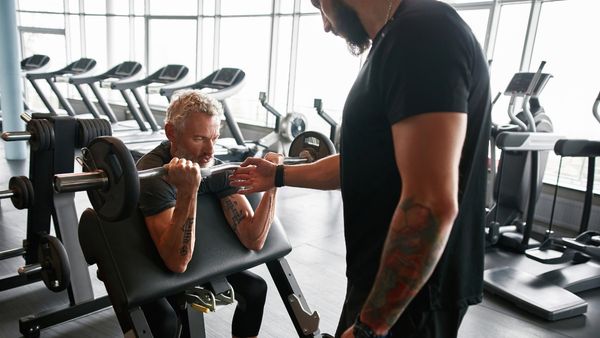
When someone comes to me, the first conversation isn’t about what an ideal program looks like. It’s about what they can actually commit to. What times have the lowest chance of getting cancelled? Before the kids are up? Lunch? After they’re in bed?
We start there. We build something consistent before we build something ambitious. At Club 16 we have an app which lets me support clients between sessions — logged workouts, nutrition coaching, accountability — so they’re not on their own when life gets in the way.
What getting back looks like
The goal isn’t the body you had before kids. That’s just not realistic.
The goal is a body that makes everything else easier. Better sleep. More energy. The ability to get through a full day without crashing. Two to three hours of workouts a week can support every other part of a busy dad’s life. That’s the baseline worth building toward.
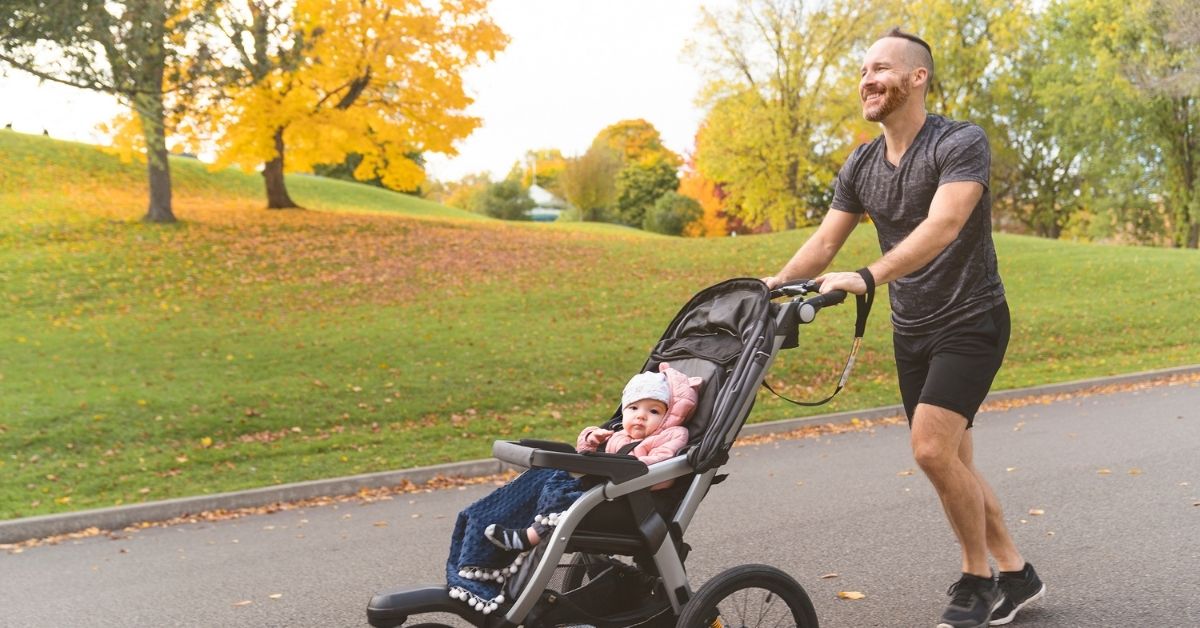
When my first daughter was born our daycare plans fell through and I ended up staying home with her for that first year. I had to figure out how to keep fit on the fly. For me it meant things like long walks with the stroller, bodyweight workouts in the garage during nap time. I wasn’t hitting the gym five days a week. I was finding pockets of movement wherever they were.
There’s research showing that doing 10 squats every 45 minutes during an eight-hour workday can be more effective for your health than a single 25-minute walk for breaking up sitting and raising your heart rate. That’s the kind of thing I tell clients who think they need a two-hour block to make fitness count. You don’t. You need consistency.
On the nutrition side, we don’t do meal plans or macro tracking at Club 16 . Instead, we start with small habits like drinking more water, getting two palmfuls of protein with every meal. Sustainable changes that don’t require a lifestyle overhaul.
Within the first few weeks of consistent training most clients start noticing the same things: sleep improves, energy returns, confidence builds. That’s what keeps them going.
The role-model effect
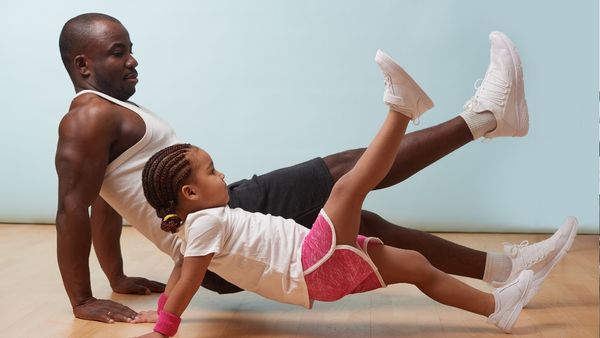
Staying fit isn’t time away from the kids. It’s something you’re doing for them. That’s what keeps me motivated.
I coach my son’s ball hockey team. I run practice. I can keep up on the floor. That’s only possible because I’ve stayed committed to my own fitness.
I did that partly because I wanted my kids to grow up seeing physical activity as something normal that their dad did. Not something that belonged to a version of their dad who existed before they arrived.
Kids notice. They notice whether you have energy at the end of the day. They notice whether you show up to their games and actually move around. The habits they build around health and physical activity are shaped by what they see at home. Dads carry a lot of influence there, whether they realize it or not.
Starting off small
You don’t need to reclaim the body you had before kids. You need a body that lets you keep up with the life you have now.
Start small like a longer walk with the stroller, a few squats every hour. Something consistent you can keep up with. The finer details get worked out from there.
If you want support in figuring out what that looks like for your schedule there’s help out there for you. Stick with the ones who will meet you where you are — not where you think you should be.
What do you think is the most challenging thing to keep up with being a dad? Share in the comments below!


ARE YOU AT RISK?
Learn your risk level for the most common men’s health conditions in 10 minutes with a free, confidential, and personalized report.