Sitting at a desk all day can leave your neck stiff, your shoulders tight and your lower back aching. Whether you work from home or in an office, it’s easy to spend hours in the same position without realizing it. One minute you’re checking your morning emails and the next thing you know, it’s past lunchtime and you’ve hardly moved beyond reaching for your coffee.
Even if you exercise outside of work (and bravo to those who do), making an effort to move more throughout the day is still important. These six easy desk exercises and stretches can help loosen stiff muscles and break up long periods of sitting.
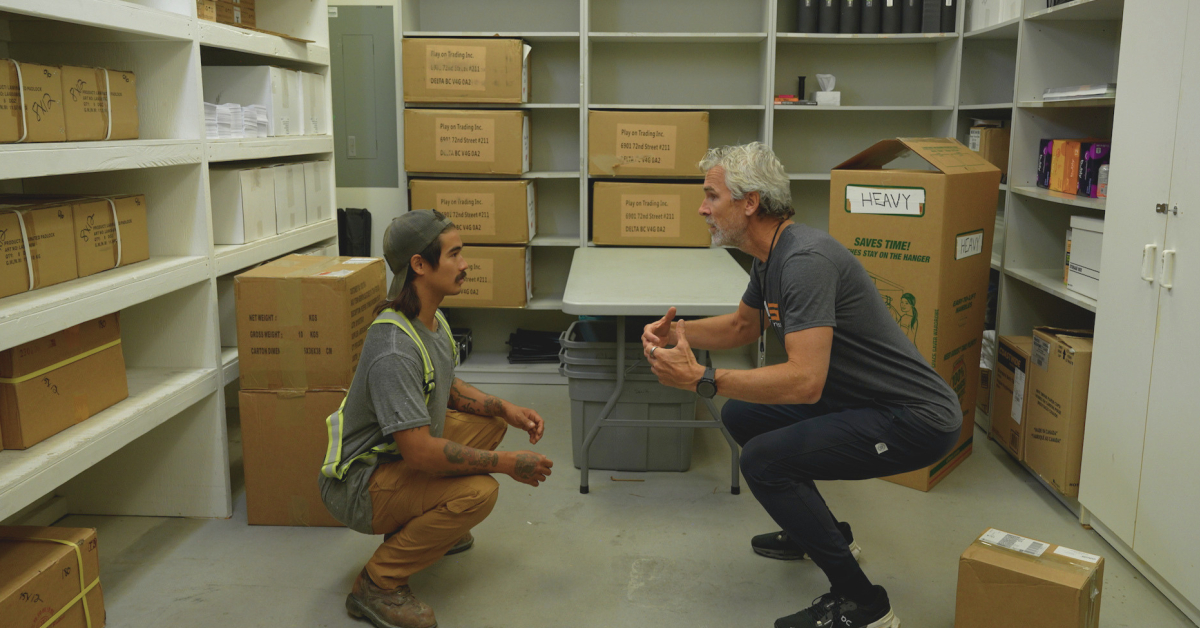
Even Trevor Linden knows that sitting all day can leave you feeling stiff. Watch what happens when he drops in on one office worker who could use a movement break.
Six easy desk exercises and stretches
These simple desk exercises require little space, no special equipment and only a few minutes of your time. Some you can do without leaving your chair.
1. Neck stretches
Hours spent looking at a computer screen can leave your neck feeling tight. Sit upright, relax your shoulders and gently tilt your right ear toward your right shoulder. Hold for 10–15 seconds, then repeat on the left. Keep the movement slow and comfortable.
2. Shoulder rolls
If you tend to hunch over your keyboard, give your shoulders some attention. Slowly roll them up, back and down 5–10 times, then reverse direction. It’s a simple way to loosen up and give those shoulders a break from their usual position.
3. Seated spinal twists
Your back deserves a break, too. Sit upright with your feet flat on the floor and gently rotate your upper body to one side. Hold for 10–15 seconds, then repeat on the other side. Don’t force the movement beyond what feels comfortable.
4. Standing back extensions
Been hunched over your desk all morning? Stand up, place your hands on your hips and gently lean backward a little, keeping your knees straight but relaxed. Hold for a second or two, then return to standing. Repeat 5 times, moving slowly and only as far as feels comfortable. Stop if the movement causes pain.
5. Standing calf raises
Ready to get on your feet? Stand with your feet about hip-width apart, slowly lift your heels off the floor, then lower them again. Repeat 10–15 times, using a stable surface for balance if needed. It’s an easy way to get your lower legs moving between tasks.
6. Desk push-ups
For something a little more active, try standing push-ups against a sturdy desk or wall. Place your hands on the surface, bend your elbows to bring your chest closer, then push yourself back. Try 5–10 repetitions, keeping the movement controlled. Make sure the surface is secure before starting.
These desk moves aren’t meant to replace regular physical activity. Instead, think of them as easy ways to add movement to your day.
If you’d prefer to follow along with a video, check out this three-minute routine using nothing more than your chair: Trevor Linden’s three-minute desk job reset.
How long should you sit without standing up?
There’s no single rule for how long you can sit before taking a break, but getting up and moving every 30 to 60 minutes is a practical starting point.
According to the Canadian 24-Hour Movement Guidelines, adults should aim to limit sedentary time to eight hours or less per day and break up long periods of sitting as often as possible.
That’s total sedentary time, not just the hours spent at your desk. Add in your commute, meals and an evening on the couch, and it’s easy to see how those hours add up. (Thankfully, sleeping doesn’t count.)
Why does this matter? Research has linked prolonged sitting with increased risk of heart disease, type 2 diabetes, and other health challenges. Sitting in one position for extended periods can also leave your neck, shoulders and lower back feeling stiff or uncomfortable.
The benefits of movement breaks aren’t just about avoiding stiffness, either. A 2026 study found that regular activity breaks (like short walks) improved blood sugar and insulin responses compared with uninterrupted sitting.
Try walking around during a phone call, taking the stairs instead of the elevator or going for a short walk at lunch. If you have a sit-stand desk, alternate between sitting and standing, but remember that standing still isn’t quite the same as moving. If reminders help, set a timer to get up every 30 to 60 minutes.
Feeling off?
Start here.
Free tools to help you deal with stress, anxiety, and tough stretches.