This week, the Government of Canada announced it is launching the country’s first national conversation on men and boys’ health; a landmark step toward creating Canada’s first Men and Boys’ Health Strategy.
The strategy aims to address a growing and often overlooked reality: men in Canada are more likely to die by suicide, less likely to seek preventive care, and more likely to struggle in silence.
Health Minister Marjorie Michel called on Canadians to help shape the future of men’s health. “To build Canada strong, we need the full participation of everyone in our society,” she said. “Help us build a strategy that improves health, prevents harm, and strengthens our communities — for men, boys, and for everyone in Canada.”
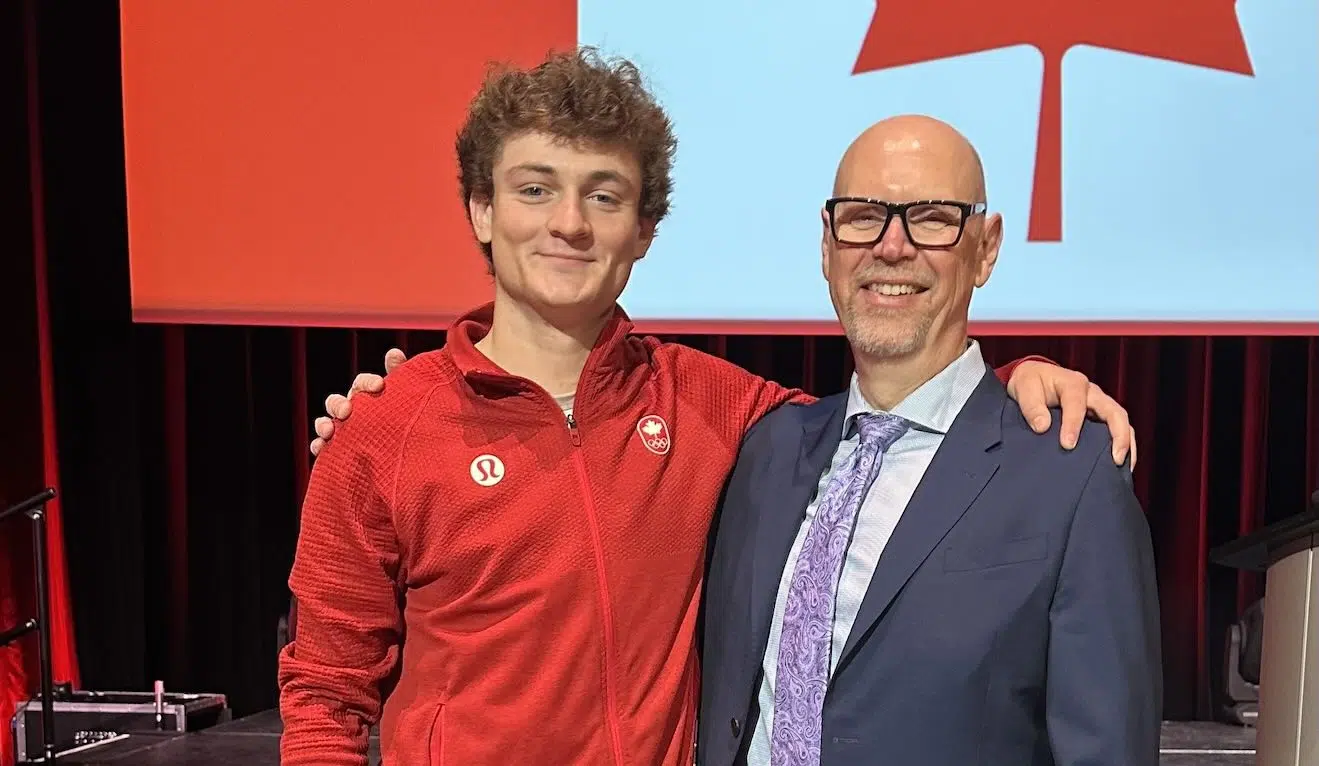
Standing in Ottawa for the announcement was Canadian Men’s Health Foundation Champion Richie Bullbrook, alongside CMHF President and CEO Kenton Boston.
Bullbrook wasn’t there just as a young, professional athlete training for the 2028 Olympic Games. His voice — steady, direct, and deeply human — captured exactly why this national conversation matters. “I am a man who struggles,” he told the room.
Watch Richie Bullbrook’s full speech:
The father who helped him chase his dream
Bullbrook was just 18 when his father, James, got sick. It happened fast. Right around Christmas.
“One week he was fine,” Bullbrook shared on the Don’t Change Much podcast. “And then all of a sudden, he was in the hospital and expected to die.” Because it was during COVID-19, Bullbrook wasn’t allowed to see him.
Around the same time, Bullbrook received an invitation that was supposed to change his life: an invitation to his first Team Canada Olympic training camp in Texas. He didn’t want to go. “I really wanted to stay home,” he said. “Even though I couldn’t be with him, I wanted to be nearby.” But his father wouldn’t let him. In a brief moment of lucidity, the elder Bullbrook made he made it clear that he wanted his son to go.
So Bullbrook left. He boarded the plane knowing his father would likely die while he was gone. “That was really hard,” he said. “I didn’t want to leave. But he made it clear that’s what I should do.”
While Bullbrook was at the training camp, he got the call. He came home and found his father on life support. That’s when he made him a promise. “I told him I’d finish this journey,” Bullbrook said. “Because it’s what he wanted for me.” His father died days later.
Bullbrook says it’s this promise that keeps him going on the tough days. “I feel like I’m living two lives all the time,” he said. “My life for me — and my life for my dad.”
When strength means speaking up
“I lost both my uncle and my father to alcoholism. These were preventable deaths. Silence is what makes them fatal, and we need to normalize vulnerability in men,” he said.
That silence is something he knows personally. After suffering a serious concussion last year, Bullbrook faced one of the hardest periods of his life. For months, he didn’t know if he would fully recover. “It forced me to confront my mental health in a very real way,” he said. “It taught me that asking for help is not optional.”
For many men, those words don’t come easily. Bullbrook believes that needs to change. “Being silent isn’t strong. Asking for help is being strong. Strength is the courage to do things differently.”
Following his speech, Secretary of State for Sport Adam van Koeverden spoke about the impact of Bullbrook’s message and the role of the Canadian Men’s Health Foundation in helping bring that voice forward.
“The Canadian Men’s Health Foundation has found themselves one of the best ambassadors and spokespeople they could have ever found,” he said. “I hope that all the men and boys listening today will learn from Richie’s example and seek help when they need it.”
A national moment and a cultural shift
The Government of Canada’s announcement signals a shift in how men’s health is being understood and addressed. For the first time, Canada is developing a coordinated national strategy focused specifically on the unique health challenges facing men and boys.
This announcement reflects decades of work by advocates, researchers, and organizations pushing to make men’s health a national priority. In Canada, groups like Movember and the Canadian Men’s Health Foundation have helped raise awareness of the challenges men face and the solutions that can help them live longer, healthier lives.
Canadian Men’s Health Foundation President and CEO Kenton Boston said the strategy reflects a reality the organization sees every day.
“The crisis we are living through is real,” Boston said. “Half of all young men are at risk of problem anger, and one in two men are socially isolated. We need to make sure all men know they are not alone.”
Bullbrook says that message is now central to his own mission. “I think there is an epidemic of men being afraid to say, ‘I’m not okay,’” he said. “I want other men to feel like they can say that as well.”
This is just the beginning
Over the coming months, Canadians will be invited to share their experiences and perspectives to help shape the country’s first Men and Boys’ Health Strategy.
Bullbrook hopes more men will find the courage to speak. Not just on national stages. But in everyday life. “I dedicate this journey to my dad and every man who is fighting something no one else can see.”
Because real strength isn’t carrying everything alone. It’s knowing when to reach out.
Join the National conversation on men’s health
The Government of Canada is inviting Canadians to take part in the national conversation on men’s and boys’ health.
You can learn more about it here. Starting on March 2nd, all Canadians can submit their feedback directly through the form there.
If you’re looking for mental health support or tools, the Canadian Men’s Health Foundation is here to help.
Feeling off?
Start here.
Free tools to help you deal with stress, anxiety, and tough stretches.