
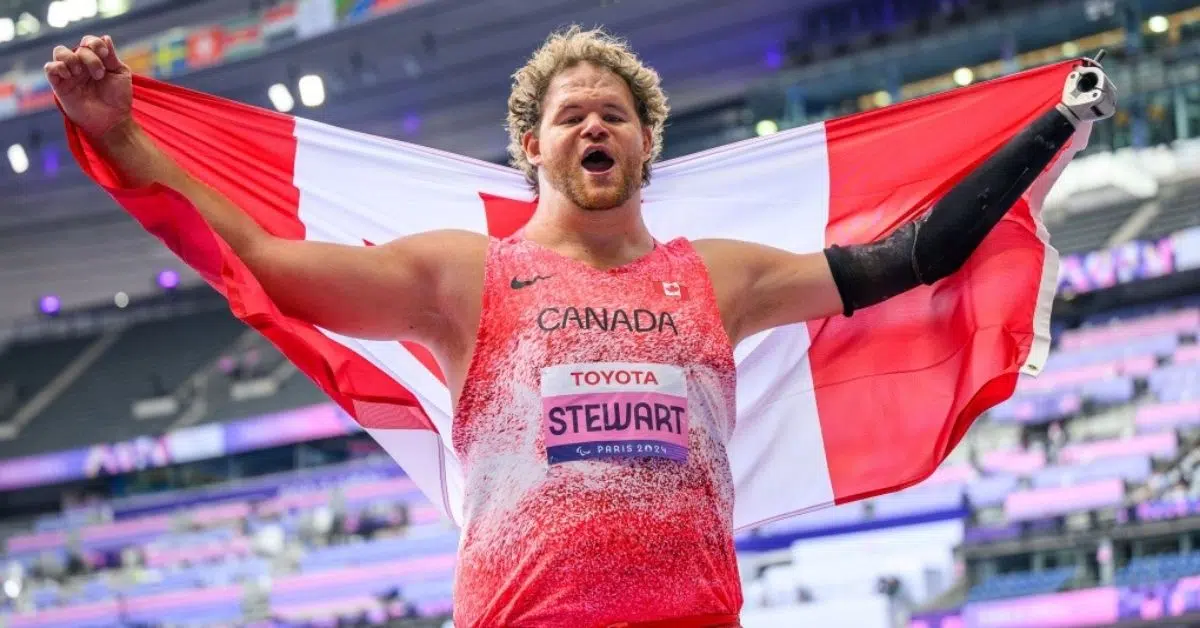
I’ve won two Paralympic gold medals. I’ve set records. I’ve stood on podiums and heard anthems play, but the hardest work I’ve ever done wasn’t in the throwing circle. It was learning to love myself.
Thirty-nine years ago, I was born with one arm. My parents had a decision to make right off the bat; how were they going to raise this child? They had my older brother who doesn’t have any form of disability, which made their decision simple — just raise me like him.
There’s no written script on how to be a parent. They raised me the best they could. But deep down I was thinking, “I’m being treated the same but I don’t quite feel the same. Internally, something’s not right.”
That feeling of disconnect between how the world saw me and how I felt inside became the foundation for everything I do today. Which is why I’m now a Champion for the Canadian Men’s Health Foundation.
Listen to Greg chat with hosts Mike and Trevor on the Don’t Change Much podcast
The identity crisis nobody talks about
Before I became a shot putter I played all kinds of sports. Five seasons of able-bodied basketball at Thompson Rivers University and was named USport Defensive Player of the Year in my final season. I won three world titles with Canada’s standing volleyball team. I earned bronze medals at two Parapan American Games in sitting volleyball.
I could do it all. But something was missing.
My identity was completely attached to being an athlete. For a few years, I was lost to the point where I thought, “I want to feel better. I don’t want to be stuck like this because life sucks.” It didn’t matter what I was doing. I never felt a sense of fulfillment, never felt connected within. I was just tired.
So I got help, and I went to therapy.
I started understanding my emotions. Learning to identify and sit with my main emotions: fear, guilt, anger, sadness, and love. I still see a counsellor regularly.
That’s when I started to learn that love comes from within so that you can project it outwards. And that’s when my mental health journey really started.

The shot that changed everything
Back in 2017, I picked up the shot put for the first time under coach Dylan Armstrong, an Olympic medalist. His first words to me were simple. “I will coach you. No problem. You just have to show up.”
That hit me hard. Show up. That’s it.
By 2018 I was ranked number one in the world. At Tokyo 2020, my first throw of 16.75 meters set a Paralympic record and earned me gold. At Paris 2024, I defended that title with a throw of 16.38 meters. And just recently, I won my first world title at the 2025 World Para Athletics Championships in New Delhi.
Shot put became a challenge I wasn’t expecting. It’s a space where it’s 100% on me. In team sports you can say, “I’m having a bad game, just sub me off.” But when I started throwing, there was no one else to blame. If I had a bad practice, that was on me.
The more I showed up and did the work in the throwing circle, the more I started to recognize I needed to do that work everywhere else too. At home, in my relationships, in how I was waking up each day and in how I was presenting myself to other people.
I walked away. Then I came back.
I announced my retirement in 2022. I was in physical pain and wanted a change. But just over a year later, I came back.
Why? Because I felt discomfort from being disconnected from the sport I loved. It wasn’t about missing the medals or the attention. It was about purpose. Connection. The thing that made me feel alive.
That decision to return wasn’t about ego. It was about ownership. One of the three core principles I now teach through my brand, The Mindfulete.
Ownership, trust, and integrity: My framework for life
Everything I teach comes down to three things: Ownership, Trust, and Integrity. OTI for short.
Ownership
Means taking responsibility for your emotions and actions. Not blaming your circumstances on others when things go sideways. Instead, it’s what role did I play here?
Before I did this work, drama was a normal thing in my life. It still happens, but I don’t experience it as much because it’s not something I own anymore. It’s not the present part of my story.
Trust
As in trust yourself. That means your instincts, your process, your ability to handle whatever comes. If you don’t trust yourself, how do you know how it feels to trust other people?
Integrity
Align your actions with your values. Living authentically even when it’s hard. Do I show up for myself? How can you show up for others if you don’t for yourself?

When you put all three together something powerful happens. You become vulnerable, and that’s where real connection and growth live.
The hardest question I ask men
Something I wonder all the time is who’s telling us that we’re not supposed to share?
Who’s telling us that as a man, you’re not allowed to share, you have to hold it all in, you have to be the sole provider? The more I’ve done this work, the more I realize those ideas can get lost, and my life has been happier for it.
There’s this idea of toughness where it asks how much pressure can I load into this vessel, this body of mine, and carry it without exploding? For me, toughness is really about how uncomfortable I can get and work through it.
If you wanna be tough then being a man and talking about it is harder than holding it in. And tough guys are supposed to do the tough things.
The simple tools that changed my life
If there’s one thing I want you to take away from my story, it’s this: find professional support. Find a counsellor or therapist. These people work in this profession for a reason, and they’re there to support you.
The other simple tool we often forget is to breathe. I’ve completed an eight-month Breath Practitioner training program. Through there, I learned that when you’re experiencing the worst life tries to throw at you, stop and take a deep breath. A long breath in, long breath out. It allows you to be present.
I lead most of my talks with two minutes of silence. If you can allow yourself to experience this moment then you’re going to experience a lot more incredible ones, too.
What I’ve learned about love
For me to say “I love me”… that’s selfish. Right? You can’t talk about yourself. As a man you’re here to protect, you’re here to support. But if I’m not protecting and supporting myself, how the hell am I going to protect and support somebody else?
The more I’ve learned to love myself, the more I’ve been able to extend that love outward. I’m confident and loving within, and people respond to that. It doesn’t matter how you look or what your circumstances are. When you love yourself, you create safety for others.
I think I’m on this earth to create support, and a sense of belonging. To help people recognize that no matter who they are or what their outcomes are, they are worthy of love.
And love is always there. You just have to be willing to see it.
Want to learn more about Greg’s journey? Check out his children’s book, Stand Out: The True Story of Paralympic Gold Medallist Greg Stewart. You can also explore his mental health resources and coaching at The Mindfulete, or follow him on Instagram @greg_r_stewart. If you’re looking for someone to inspire you, Greg’s got a heart the size of his build.
Feeling off?
Start here.
Free tools to help you deal with stress, anxiety, and tough stretches.
Feeling off?
Start here.
Free tools to help you deal with stress, anxiety, and tough stretches.

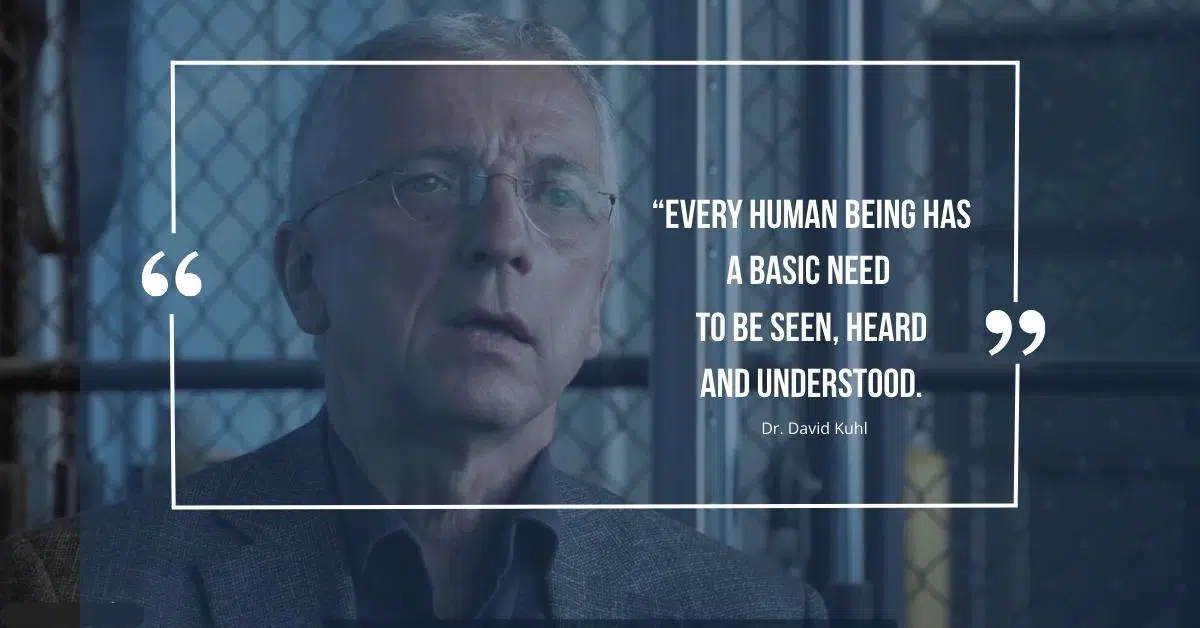


“If you wanna be tough then being a man and talking about it is harder than holding it in. And tough guys are supposed to do the tough things.”
Great talk! Like the stuff about drama, and big brother stuff; very serious, thank you for sharing that keen insight into your self.
Being vulnerable and wise means distinguishing between people who will authentically value your story, and people who otherwise consider your story just like another 60 Minutes episode. Or maybe some people who aren’t extracting anything like what we want aren’t meant to be seeing the value from it at that time, maybe they’ll get it later.
Fluff pillows make dinner? I kinda missed out on all that even though I knew at the time, thats exactly the kind of person I wanted to be in my late twenties back at the turn of the last century.
Thank you for being so clear on the idea that fear is ok to become transparent about, and getting clear about ‘love and like’ , instead of some form of gauze over my eyes in monitoring my emotions, something most people don’t consciously do every waking moment.
Good question about where’d or who’s telling us not to share? I had a different feeling when younger when hearing adults express “didn’t want to talk about it” mostly in the context of war time experiences, easily interchangeable though with many facets of “PTSD” and many have without knowing it, so they can’t work with, not knowing its there, operating like a shadow instead.
Thank you for having the largesse and capacity of character and “bigness” to lend your voice to what everyone is consuming every day and while many are “searching” through music and drama but you draw it all back to where it begins, and maybe that’s where it ends, in the heart.
Before this podcast I had Justin Biebers song mysteriously pop into my head, I have never ever criticized or downgraded Justin Bieber but today we got into more deeper bass notes about breathing, reinforcement for the idea that these basic ideas, after all this time: still work!
Thank you for keeping the flame alive, like a baton to pass! Good advice from an Olympic champion!
Thanks for showing a lack of anything can always be shored up with parts that are already there and built for exactly that! Great podcast, see him over on Insta!